Political
Government regulations, environmental policies and permitting affect operations. Trade policies, tariffs and taxes influence profitability, and political stability is crucial for long-term investment.
Industries
Mining supplies the essential raw materials for manufacturing, construction and energy, and plays a crucial role in global economic development. Mining companies face fluctuating commodity prices, environmental regulations, labor shortages and sustainability concerns. Digital transformation is reshaping the industry through automation, AI-driven exploration and real-time data analytics.
To thrive, mining companies must adopt innovative technologies, optimize operational efficiency and implement sustainable mining practices, for long-term profitability and regulatory compliance.

A PESTEL analysis helps understand the macro-environmental factors affecting the mining sector:
Government regulations, environmental policies and permitting affect operations. Trade policies, tariffs and taxes influence profitability, and political stability is crucial for long-term investment.
Commodity price volatility, inflation and rising operating costs challenge profitability, and demand swings and currency risks affect revenue. Cost efficiency and supply chain resilience are key.
Public perception, community relations and environmental concerns influence approvals. Workforce safety and skilled labor drive productivity, and ethical sourcing and CSR build reputation and investor confidence.
Automation, AI and IoT improve efficiency and safety. Real-time analytics optimize exploration, equipment maintenance and production planning, while remote operations cut costs.
ESG regulations, climate change and resource conservation shape the future of mining. Sustainable practices, such as responsible waste disposal and land rehabilitation, and lower carbon and water use are essential.
Compliance with labor laws, environmental regulations and mining rights avoids penalties. Land disputes, lawsuits and occupational health standards call for strong legal frameworks and proactive risk management.

Digital technologies and AI improve efficiency and safety and reduce environmental impact, with better data management, predictive maintenance and autonomous operations.
The shift to renewable energy and electric vehicles lifts demand for lithium, cobalt and rare earth elements, pushing firms to explore new reserves and invest in sustainable extraction.
Stakeholders expect environmental stewardship, social responsibility and robust governance, including decarbonization, community engagement and transparent reporting.
Tensions fragment mineral supply chains as nations secure critical resources, creating bilateral agreements, export restrictions and efforts to diversify supply.
Growing mineral demand drives interest in seabed resources, but regulatory, environmental and technological challenges must be solved for responsible exploitation.
Governments, particularly in the United States, strengthen domestic production and reduce reliance on foreign sources by streamlining permits and offering incentives.
Rising adoption boosts productivity, safety and cost savings, enabling remote operations and reducing human exposure to hazards.
Recycling initiatives reduce waste, maximize the use of existing materials and help mitigate supply risks for critical minerals.
Companies explore untapped regions such as the Gulf countries, which are investing heavily in mining to diversify their economies away from oil revenues.
Geopolitical events, economic downturns and supply-demand shifts keep prices volatile, calling for adaptive strategies and risk management.


A Balanced Scorecard is a strategic management framework that translates vision into goals across four perspectives: Financial, Customer (Stakeholders), Internal Processes, and Learning & Growth. For mining, it improves profitability, stakeholder relationships, operational efficiency and innovation.
fruiStrategy helps mining companies build a best-practice Balanced Scorecard tailored to industry challenges, from operational safety and environmental compliance to resource optimization and supply chain resilience, for measurable outcomes and long-term sustainability.
Initiatives are strategic projects that close critical value gaps and execute your vision. They are the bridge between Balanced Scorecard objectives and measurable results, such as higher ore recovery rates, lower operating costs or better ESG compliance.
For mining companies, initiatives might include the following, each tied to KPIs such as reducing equipment downtime by 15% or increasing energy efficiency by 20%:
fruiStrategy manages initiatives from planning and budgeting to execution and monitoring, with end-to-end visibility into milestones, resources and risks, so strategic investments like sustainability projects or supply chain digitization deliver tangible outcomes.

Equipment breakdowns, mine collapses and supply chain inefficiencies can halt production. Spare part delays, strikes or harsh weather (flooding, landslides) cause revenue loss and safety risks.
Swings in metal and mineral prices, falling demand, trade restrictions and speculation make revenue unpredictable, forcing cost cuts or even mine closures.
Stricter rules on emissions, water use and land rehabilitation raise costs. Non-compliance brings fines, shutdowns and reputational damage, and permitting delays can stall new projects.
Explosions, cave-ins, toxic gas and equipment injuries. Weak safety measures, shortages and poor training can lead to accidents, fatalities and legal liability.
Ransomware can disrupt autonomous drilling and haulage, hacked geological data creates competitive disadvantage, and IoT breaches can compromise safety.
Inaccurate reserve estimates and declining ore grades affect viability. Harder rock or unviable deposits raise extraction costs and reduce efficiency.
Remote sites often face power shortages, weak transport and unreliable water. Fossil fuel dependence or too little renewable energy raises costs and slows production.
Unstable regions risk sudden tax hikes, nationalization and regulatory shifts. Community protests over land rights, displacement and the environment can cause legal battles, delays or shutdowns.

Strategic analysis tools and the BSC methodology align operational goals, track performance and drive long-term sustainability. Set strategic objectives, manage initiatives with clear ownership and budgets, and monitor execution through periodic reviews and reporting.
Link objectives and initiatives to efficiency improvements, cost optimization and regulatory compliance, for continuous operational excellence.
Supports resource planning, supply chain efficiency and ESG compliance.
CAPEX, OPEX and STRATEX budgets aligned with strategy optimize equipment investments, operating spend and growth initiatives.
Helps mitigate operational disruptions, safety hazards and regulatory challenges.
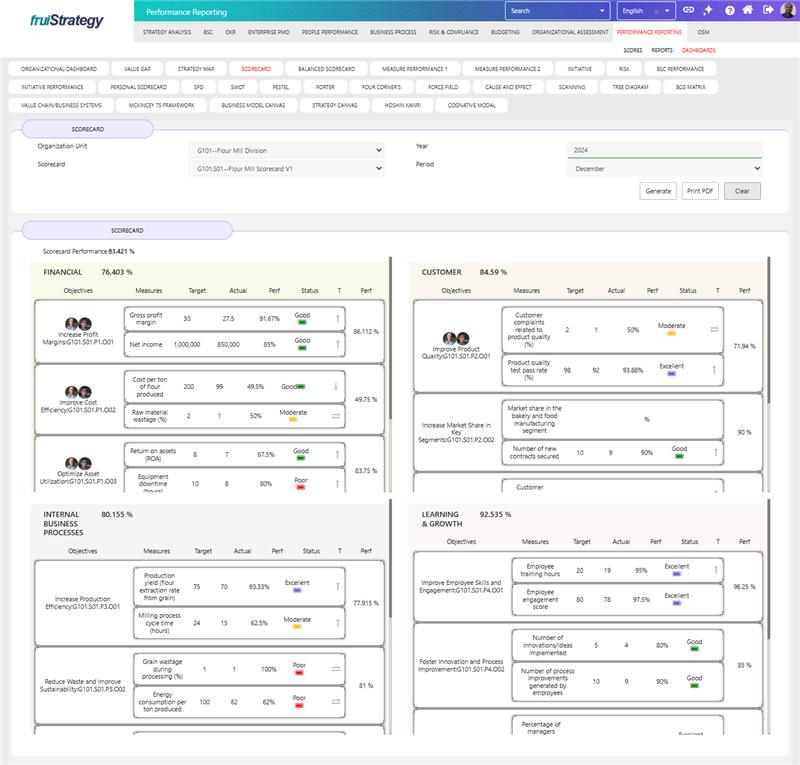
With real-time visibility, 360-degree operational reviews and data-driven decisions, fruiStrategy helps mining companies enhance profitability, sustainability and resilience in a volatile global market.