Political
Defense policies, military alliances and government budgets shape operations, and geopolitical conflicts drive arms procurement and strategy shifts.
Industries
The defense and military industry is critical to national security, sovereignty and geopolitical stability, spanning armed forces, defense contractors, cybersecurity units, intelligence agencies and military technology development. Governments allocate substantial budgets for military preparedness, deterrence and rapid response to threats.
The industry faces cyber warfare, emerging military technologies, geopolitical tensions and budget constraints. Nations are investing in AI-driven defense systems, autonomous drones, space-based surveillance and next-generation weapons, and collaboration between defense agencies, technology firms and private contractors is crucial in modern warfare.

A PESTEL analysis of the macro-environmental factors affecting the Defense & Military sector:
Defense policies, military alliances and government budgets shape operations, and geopolitical conflicts drive arms procurement and strategy shifts.
Military spending fluctuates with economic cycles, and contractors depend on long-term government contracts and global arms trade regulations.
Public opinion on defense spending, military ethics and war strategies affects policy, and recruiting and retaining skilled personnel remain key concerns.
AI-driven weapons, unmanned aerial vehicles (UAVs) and cybersecurity advances enhance modern warfare capabilities.
Climate change affects military operations and infrastructure, and sustainable energy is being adopted for bases and equipment.
Arms control treaties, export regulations and ethical warfare laws govern military engagements and defense contracts.

Forces integrate AI, quantum computing and cybersecurity to counter digital threats.
Nations invest in space-based defense for surveillance and strategic advantage.
Drones, robotic soldiers and AI-powered systems are revolutionizing combat operations.
Advanced communications improve battlefield coordination and speed of decisions.
Growing reliance on private contractors for R&D, logistics and intelligence.


A Balanced Scorecard helps defense and military organizations translate national security objectives into measurable operational and strategic goals, enhancing readiness, resource utilization and command efficiency while aligning operations with geopolitical strategy and defense policy.
fruiStrategy supports a mission-aligned Balanced Scorecard that integrates force readiness, technological superiority, personnel development and inter-agency coordination to protect national interests and manage strategic defense initiatives effectively.
Initiatives are strategic programs that close critical value gaps and put the organization’s strategic plan into action.
Key initiatives in the Defense & Military sector may include:
fruiStrategy equips defense and military organizations with tools for initiative planning, execution and review, with visibility into resource use, timelines and risks, so each strategic project delivers real, measurable value.

Digital warfare exposes military networks to hacking and espionage.
Changing global power dynamics affect defense alliances and arms trade policies.
Military projects often exceed budgets, affecting long-term strategic planning.
Unregulated AI weapons and autonomous warfare raise moral and legal questions.
Dependence on foreign suppliers for critical defense components poses security risks.

Intelligence-led, data-driven strategy using strategic analysis tools and the BSC framework to align mission readiness, force modernization and national security objectives with measurable outcomes.
Set strategic objectives, manage procurement and infrastructure modernization with full budget control, and monitor readiness, efficiency and compliance KPIs, linking objectives to cybersecurity, logistics, personnel development and geopolitical cooperation.
Supports multi-domain force integration, defense budget optimization and international alliance management.
CAPEX, OPEX and STRATEX budgets align spending on weapon systems, training and intelligence capabilities with national defense priorities.
Embedded risk frameworks mitigate cybersecurity threats and geopolitical disruptions.
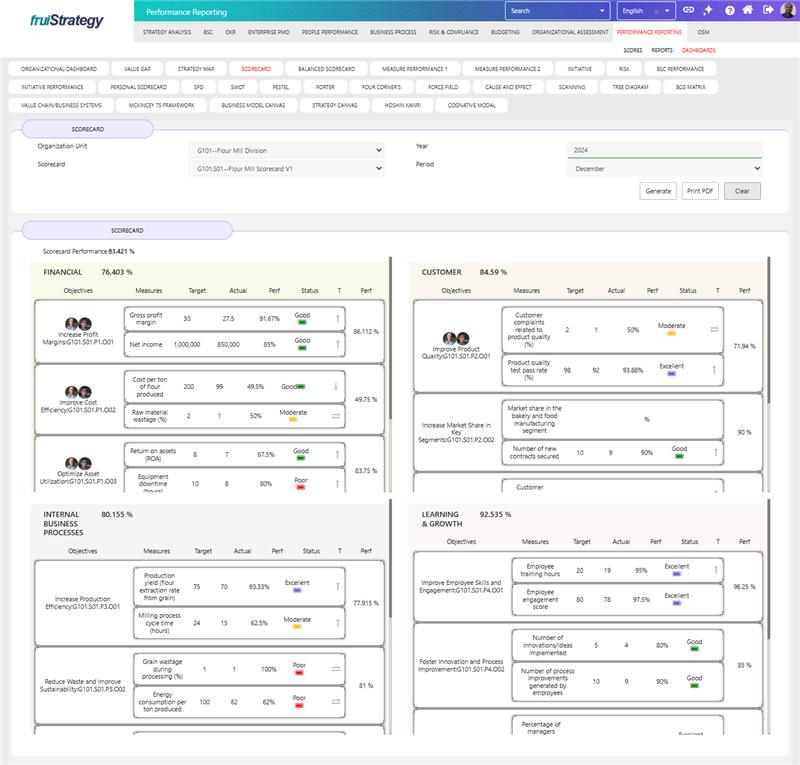
With real-time visibility and intelligence analytics, fruiStrategy enhances operational readiness, tactical decision-making and strategic deterrence in an increasingly complex security environment.