Political
Projects depend on government policies, regulatory approvals and political stability, and public-private partnerships (PPPs) play a key role in financing large-scale projects.
Industries
Infrastructure & Public Works form the backbone of a nation’s economic growth, connecting industries, businesses and communities through reliable transportation, energy and water systems. Governments and private entities invest heavily in roads, bridges, power grids and water supply networks to ensure sustainability and economic progress.
The sector faces aging infrastructure, funding gaps, increasing urbanization and climate-related disruptions. Digital transformation is accelerating, with smart infrastructure, AI-powered maintenance and renewable energy projects playing a vital role, while sustainable planning, efficient resource management and innovation shape the future.

A PESTEL analysis of the macro-environmental factors affecting the Infrastructure sector:
Projects depend on government policies, regulatory approvals and political stability, and public-private partnerships (PPPs) play a key role in financing large-scale projects.
Economic growth drives infrastructure investment, but inflation, interest rates and budget deficits affect project viability and maintenance funding.
Urbanization increases demand for efficient transportation, water supply and reliable energy, and public expectations for sustainability and affordability influence policy.
Smart grids, AI-driven traffic management and IoT-enabled water distribution improve efficiency and reduce maintenance costs.
Climate change affects road durability, water availability and energy needs, and green infrastructure, sustainable construction materials and renewable energy are gaining importance.
Compliance with zoning laws, labor regulations and environmental standards is essential, along with safety regulations and contractual obligations.

IoT sensors, AI-based analytics and predictive maintenance improve efficiency and reduce operating costs.
Solar, wind and hydropower projects replace fossil fuel dependency and promote sustainability.
Governments work with private investors for cost-effective, faster project execution.
Climate-resilient road networks, smart water grids and flood control systems are gaining prominence.
Intelligent transport systems, EV charging stations and autonomous-vehicle-ready infrastructure improve urban connectivity.


A Balanced Scorecard enables Infrastructure & Public Works agencies to align public infrastructure investment with national and local development goals, supporting project transparency, fiscal efficiency and long-term sustainability while serving citizens’ needs.
fruiStrategy enables government bodies and infrastructure developers to build a robust Balanced Scorecard that links infrastructure strategy with execution through efficient budgeting, regulatory compliance, smart city integration and sustainable development planning.
Initiatives in infrastructure and public works are strategic programs that bridge performance gaps and turn long-term development plans into actionable outcomes, enhancing urban mobility, modernizing utility services and building resilience against environmental and operational risks.
For infrastructure agencies and departments, key initiatives may include:
Each initiative is aligned with KPIs (e.g., project delivery time, service uptime, asset lifecycle cost) for measurable impact and strategic alignment.
fruiStrategy helps infrastructure and public works bodies design, prioritize and track initiatives, from budgeting and risk assessment to progress monitoring, for sustainable, efficient and accountable development.

Cost overruns and delayed funding approvals affect large-scale projects.
Many cities struggle with outdated roads, water systems and power grids that need urgent upgrades.
Reliance on digital solutions exposes infrastructure to cyber threats and hacking.
Extreme weather, rising temperatures and water scarcity affect long-term durability.
Strict environmental and labor laws can delay execution if not met.

Define, implement and track infrastructure strategies with clarity, accountability and efficiency, using the BSC and capital planning tools to align investments with urban growth, economic development and climate resilience.
Set strategic goals, manage programs with multi-year budgeting and monitor delivery through KPIs like asset uptime, cost variance and schedule adherence, connecting objectives with smart infrastructure, maintenance optimization and citizen service outcomes.
Supports project lifecycle management, sustainable construction and green infrastructure planning.
CAPEX, OPEX and STRATEX budgets direct funds to high-impact areas like transportation, water supply, waste systems and utilities.
Mitigate delays, cost overruns and environmental risks.
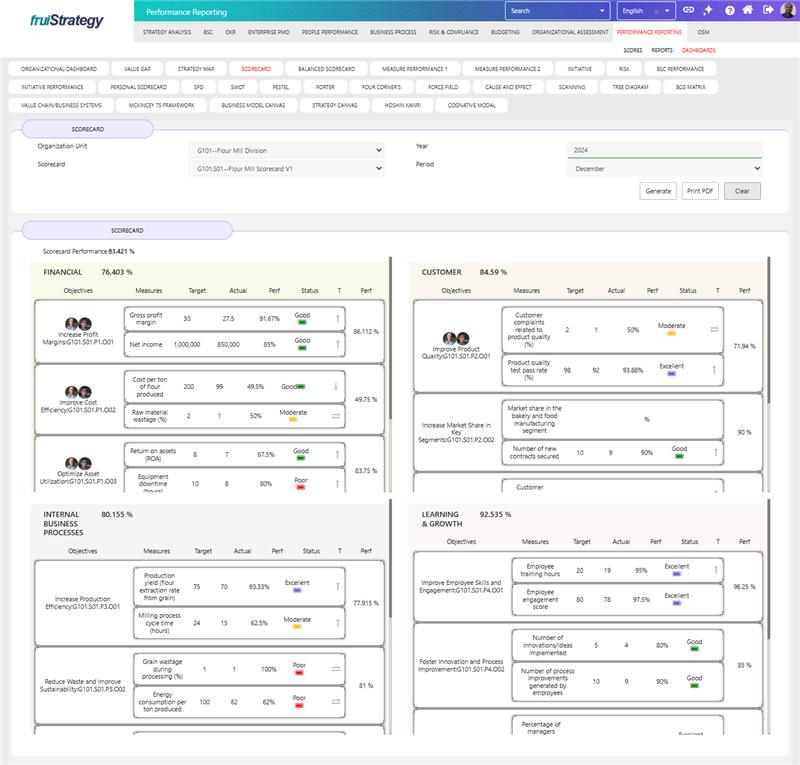
With integrated insights and real-time reporting, fruiStrategy drives infrastructure efficiency, service reliability and future-proof public investment strategies.